


Signs of a Bad Catalytic Converter
Most of us are aware of the challenges of climate change. Controlling further damage to the environment, including the atmosphere and the air we breathe, has become a top priority for environmentalists and governments alike over the last few decades.
Toxic gases are unfortunately a by-product of the combustion process of any internal combustion engine, be it your family sedan, diesel trucks, or even a lawnmower.
Efforts to minimize these emissions have led to the fitment of catalytic converters in the exhaust systems of most modern vehicles, like your Chevy. The catalytic converter in your car, unfortunately, does have a limited working life before needing replacement.
So, read on as our article looks at the signs of a bad catalytic converter.
What Is a Catalytic Converter and Why Does It Matter
As we have already briefly touched on, the catalytic converter in your Chevy is a crucial emissions control device in your vehicle's exhaust system. It is tasked with scrubbing harmful exhaust pollutants from the engine's exhaust emissions that would otherwise cause damage to human health and the environment.
A catalytic converter is typically in the form of a metal canister in the exhaust system, sitting between the engine and the muffler. The catalytic converter requires high heat to function, so most catalytic converters are incorporated into the exhaust manifold design of modern vehicles.
The converter is constructed with precious metals such as platinum, rhodium, and palladium that react with the toxic engine pollutants like carbon monoxide, nitrogen oxides, and hydrocarbons under high temperatures to convert them into less harmful substances that include carbon dioxide, nitrogen, and water vapor.
As we can see, the catalytic converter is responsible for significantly reducing air pollution and respiratory irritants to improve public health by making the air around us more breathable, along with protecting the environment from smog.
The correct functioning of a catalytic converter matters because it cleans up vehicle exhaust emissions and is becoming a mandatory part of modern vehicles to meet strict emissions regulations from laws like the Clean Air Act.
A catalytic converter is often referred to as a 'cat,' an abbreviation used by both mechanics and car enthusiasts.

What Are the Symptoms of a Bad Catalytic Converter?
Let's cover some symptoms that drivers can keep a lookout for, pointing to a bad catalytic converter.
Reduced Engine Performance and Acceleration
Sluggish acceleration may be experienced as the engine feels weak or struggles to speed up due to an exhaust restriction or possible incomplete combustion, causing the engine to feel rough or stall.
Check Engine Light Illumination
The modern electronics in your Chevy include sensors like O2 sensors in the exhaust system that monitor emissions and the working condition of the catalytic converter.
A bad catalytic converter will very often trigger the check engine light to come on. Running an OBD diagnostics scan will show generic fault codes like P0420 or P0430 that indicate a bad cat, and no, not the one howling in the neighbor's yard at night keeping you awake.
Rattling Noise from Under the Vehicle
When the internal honeycomb material construction inside the cat breaks down, you may very well hear odd rattles from under the vehicle.
Failed Emissions Test
Failing any mandatory emissions test is a sure sign that there is a problem with your Chevy's catalytic converter.
Strong Sulfur or Rotten Egg Smell
Before you go blaming your kids, be aware that a failing cat will result in unconverted sulfur compounds escaping as foul, strong sulfur odors strangely reminiscent of rotten eggs.
Decreased Fuel Economy
As part and parcel of the poor performance mentioned above, the vehicle's fuel economy will suffer as the vehicle's computer will attempt to correct the intake air/fuel mixture, as well as the exit of engine exhaust gases being restricted.
Dark Exhaust Smoke
Further to the issue of decreased performance and fuel economy, the incomplete combustion of fuels will lead to dark exhaust smoke being emitted.
What Causes Catalytic Converter Failure?
The metal body of the catalytic converter and its internal materials are subjected to many destructive processes over their lifespan that will eventually lead to their failure.
Engine Misfires and Oil Consumption
A misfiring engine, as a result of issues like faulty spark plugs or ignition coils, causes unburnt fuel to be dumped into the exhaust, which then ignites and melts the core of the catalytic converter.
An engine that suffers from excessive oil burning and leaking oil past the piston rings will cause the catalyst to become coated, fouling its surfaces and blocking exhaust flow, compromising its working life.
Contaminated Fuel or Coolant
Poor fuel quality can poison the catalyst from sulfur or other contaminants typically found in low-quality fuel.
Physical Damage from Road Debris
The catalytic converter will suffer damage from vibrations and impacts from potholes, speed bumps, or road debris that can crack or break the honeycomb internal structure.
Age and High Mileage Wear
The materials used in the catalytic converter will simply wear out over time and high mileage as the cat goes about its business.
Drivers using their vehicles for mostly frequent short trips can experience earlier catalytic converter failure, as these shorter trips don't allow the catalytic converter in the exhaust system to reach optimal operating temperature, eventually leading to a buildup of exhaust pollutants.
Diagnosing a Faulty Catalytic Converter
Diagnosing a bad catalytic converter typically involves checking for all of the symptoms we've learned of above.
Professional diagnosis is best done by your nearest Chevrolet certified service center when the Check Engine Light comes on.
Professional diagnostics include using an OBD-II scanner for checking O2 sensor data, as well as using infrared thermometers to determine whether exhaust gases are hotter at the outlet than at the inlet of the cat.
Preventing Catalytic Converter Problems
Owners have a part to play in preventing potentially expensive catalytic converter problems.
Regular Maintenance Schedule
To help prevent possible catalytic converter problems, owners are advised to adhere to their vehicles' recommended maintenance schedules.
Regular vehicle maintenance includes necessary services like oil changes, spark plug renewals, and filter replacements to ensure the correct running of the engine.
The use of high-quality fuel, along with avoidance of short trips, plus responsible driving that doesn't involve hard acceleration that leads to overheating, will reduce stress on the catalytic converter.
Protecting Against Theft
Unfortunately, the precious metals used in the construction of a vehicle's catalytic converter do attract thieves.
Replacing a stolen Chevy catalytic converter can typically set owners back between $1,000 and $3,000 and more. Owners of models like the new Silverado will do well to park in safe areas, as the replacement cost of a catalytic converter for their truck runs over $5,000.
To avoid the expense of replacing stolen bits from your car, owners are advised to deter any attempts of theft from their vehicles by parking in secure, well-lit areas or garages and by installing anti-theft devices like exhaust cages or sensor alarms that activate when any vibration is detected from sawing or angle grinder use or movement like tilting to gain access is detected.
Lessen the risk of theft by making your vehicle less appealing to these unscrupulous folk by increasing the difficulty and risk of any theft.
Some theft deterrent suggestions include parking in a way that makes it difficult for thieves to get under your vehicle, or try to block access with another vehicle if your truck happens to have high ground clearance.
Another idea is to paint your vehicle's converter with high-temp fluorescent paint, making it look marked to deter thieves.
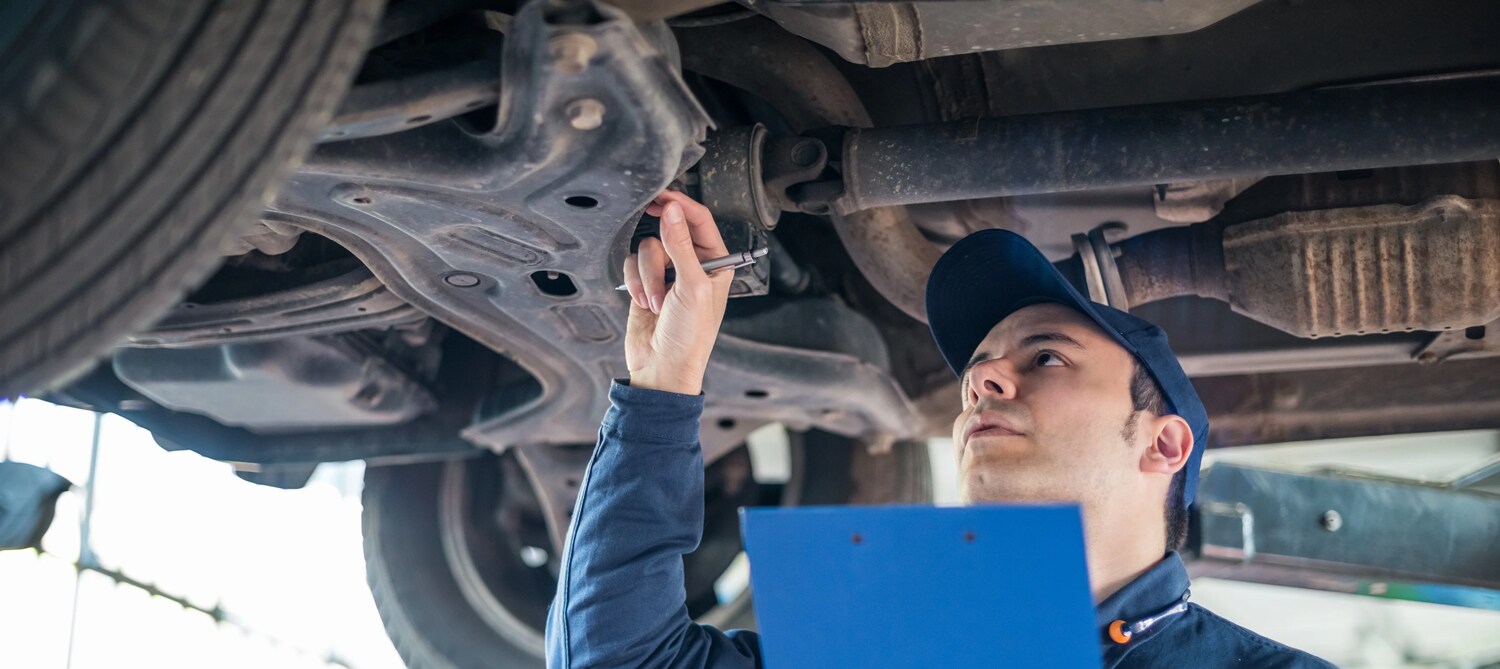
Repair or Replacement Options at Our Chevrolet Dealership
Having detected a problem with your Chevy's catalytic converter, any repair is best left to the trained technicians at a certified service center like Colonial Chevrolet in New London, CT.
Minor issues like small cracks or leaks in a catalytic converter's housing can be repaired with high-heat sealants, or the internals can be cleaned of light soot buildup with cleaners or with heat.
Internal damage, which includes melted or cracked substrate, will require full replacement, as the expensive ceramic honeycomb core of a converter cannot be fixed. The only real repair involves the replacement of the unit.
Replacement with an OEM part is recommended for the best performance and adherence to mandatory emissions regulations and testing.
What Happens If I Drive with a Bad Catalytic Converter?
Poor performance, decreased fuel economy, and, of course, bad egg smells can be expected when driving with a bad catalytic converter.
OEM vs. Aftermarket Catalytic Converters
OEM catalytic converters are constructed with more precious metals for better emissions control, longer working life, and higher quality than cheaper aftermarket ones.
The rub-off of the cost saving is that aftermarket converters are designed to meet basic standards with lower performance and durability. These aftermarket parts may not fit perfectly, may trigger Check Engine Lights, or provide the correct emissions control.
Warranty Coverage Information
The good news is that Chevrolet OEM catalytic converters are covered by a specific Federal Emission Control System Warranty of 8 years or 80,000 miles, whichever occurs first.
Get Your Catalytic Converter Serviced at Colonial Chevrolet
Keeping your Chevy running in top condition is easy thanks to the certified service center at Colonial Chevrolet in New London, CT.
Our team of highly qualified technicians knows every inch of your Chevy to offer a full range of services, from routine maintenance to replacement of a bad catalytic converter.